Federal Paid Family Leave Rules: 12 Weeks Benefits Explained
Advertisements
Taking up to 12 weeks off to welcome a child or care for a sick loved one shouldn't force you to choose between family and your paycheck. Under Federal Paid Family Leave Rules, 12 weeks of job-protected leave applies nationwide through the FMLA, while federal paid parental leave under FEPLA covers eligible civilian government workers rather than all private-sector employees.
For most private-sector workers, federal law guarantees unpaid job protection and health coverage continuation rather than automatic wage replacement, making state paid leave programs and employer policies critical.
Meanwhile, federal civil servants receive up to 12 weeks of paid parental leave for qualifying birth, adoption, or foster events, alongside updated OPM regulations.
Whether you are planning upcoming parental leave, navigating state-mandated family insurance, or managing workforce compliance, knowing how federal rules and state programs overlap protects your income. Here are the key eligibility rules, coverage gaps, and policy updates to watch next.
Understanding the Federal Family and Medical Leave Act (FMLA)
The Family and Medical Leave Act (FMLA) serves as the cornerstone of Federal Paid Family Leave Rules. Enacted in 1993, this federal law mandates certain employers to provide eligible employees with up to 12 weeks of unpaid, job-protected leave per year for specific family and medical reasons.
While FMLA itself does not require paid leave, it guarantees that an employee can return to their job or an equivalent position after their leave, maintaining their health benefits.
Eligibility for FMLA is not universal; it applies to employers with 50 or more employees within a 75-mile radius.
Furthermore, employees must have worked for their employer for at least 12 months, accumulated 1,250 hours of service during the 12 months prior to the leave, and work at a location where the employer has 50 or more employees within 75 miles. These criteria are crucial in determining who can access the protected leave under federal guidelines.
The FMLA covers a range of situations, including the birth and care of a new child, adoption or foster care placement of a child, caring for an immediate family member (spouse, child, or parent) with a serious health condition, or the employee's own serious health condition.
Additionally, it includes special provisions for military family leave, offering up to 26 weeks for qualifying exigencies or to care for a service member with a serious injury or illness. These provisions form the bedrock of federal protections.
The Distinction Between Paid and Unpaid Leave
It is crucial to differentiate between the FMLA's job-protected unpaid leave and the concept of paid family leave, which is a key aspect of Federal Paid Family Leave Rules.
The FMLA ensures job security and continued health benefits but does not mandate wage replacement during the leave period. This distinction often leads to financial strain for families needing to take extended time off work.
However, many states and some employers have implemented their own paid family leave programs, often running concurrently with FMLA.
These state-level programs provide partial wage replacement, alleviating some of the financial burden associated with taking leave. It is important for employees to understand how these state benefits interact with federal protections to maximize their available resources.
The absence of a universal federal paid family leave mandate means that access to paid leave remains a patchwork system across the United States.
While the FMLA provides a baseline of job protection, the financial component often depends on where an employee lives or the policies of their specific employer. This highlights the ongoing debate surrounding comprehensive federal paid family leave legislation.
State-Level Paid Family Leave Programs and Their Interplay
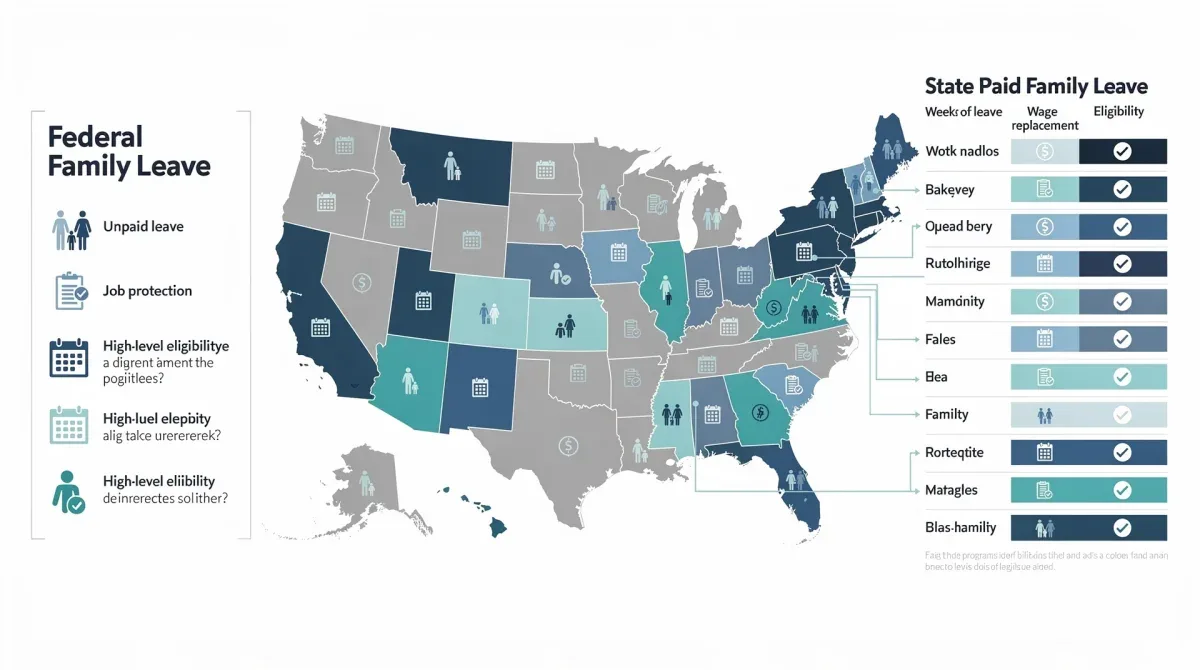
While Federal Paid Family Leave Rules primarily refer to the FMLA's unpaid protections, numerous states have stepped in to offer paid leave benefits. These state programs vary significantly in terms of eligibility, duration, and benefit levels, creating a complex landscape for employees and employers alike. It is essential for individuals to investigate the specific laws in their state of residence or employment.
California, New Jersey, New York, Rhode Island, Washington, Massachusetts, Oregon, Colorado, and Maryland are among the states that have enacted paid family leave laws.
These programs typically provide a percentage of an employee's average weekly wage for a specified period, often overlapping with the 12 weeks of FMLA leave. Understanding how these state benefits coordinate with federal FMLA is vital for maximizing leave entitlements.
For instance, an employee in California might take 12 weeks of FMLA-protected leave for the birth of a child, during which they could also receive partial wage replacement through California's Paid Family Leave program.
This dual coverage offers both job security under federal law and financial support under state law. Navigating these combined benefits requires careful planning and knowledge of both federal and state regulations.
Eligibility Criteria for Federal Paid Family Leave Rules
Understanding the eligibility requirements is fundamental for anyone seeking to utilize the Federal Paid Family Leave Rules. As previously mentioned, the FMLA sets specific thresholds that both employers and employees must meet for the protections to apply. These criteria ensure that the law is applied consistently, though not universally, across the workforce.
For an employer to be covered, they must be a private-sector employer with 50 or more employees in 20 or more workweeks in the current or preceding calendar year, or a public agency (local, state, or federal), or a public or private elementary or secondary school. This broad definition ensures that a significant portion of the American workforce falls under FMLA's purview, establishing a baseline of protected leave.
Employee eligibility hinges on three key factors: having worked for the employer for at least 12 months, having accrued at least 1,250 hours of service during the 12-month period immediately preceding the leave, and working at a location where the employer has at least 50 employees within 75 miles. Meeting these criteria is the gateway to accessing the 12 weeks of job-protected leave, providing crucial time off without fear of job loss.
Reasons for Taking Protected Leave Under FMLA
The Federal Paid Family Leave Rules define specific qualifying reasons for taking FMLA leave. These reasons are designed to support employees during significant life events that require their presence away from work. The scope of these reasons reflects a recognition of the essential balance between work responsibilities and personal or family needs.
The primary reasons include the birth of a child and to care for the newborn child within one year of birth. This provision allows new parents to bond with their infants without jeopardizing their employment.
Similarly, the placement with the employee of a child for adoption or foster care, and to care for the newly placed child within one year of placement, is also covered, supporting families through various pathways to parenthood.
Another critical category is caring for the employee’s spouse, child, or parent who has a serious health condition. This provision acknowledges the demanding nature of caregiving and provides vital support to those facing family health crises.
Finally, a serious health condition that makes the employee unable to perform the essential functions of their job is also a qualifying reason, ensuring employees can address their own health needs. These diverse reasons underscore the comprehensive nature of FMLA protections.
Employer Responsibilities and Compliance
Employers covered by the Federal Paid Family Leave Rules have specific responsibilities they must adhere to. Compliance with FMLA is not merely a suggestion but a legal obligation, carrying significant implications for businesses that fail to meet their duties. Understanding these responsibilities is critical for maintaining a fair and lawful workplace environment.
Firstly, employers must post a general notice about the FMLA in a conspicuous place where employees and applicants can see it. They must also include information about FMLA rights and responsibilities in employee handbooks or provide it to new employees. This transparency ensures that employees are aware of their rights and how to exercise them, promoting an informed workforce.
When an employee requests FMLA leave, the employer must determine eligibility, notify the employee of their eligibility status, and designate the leave as FMLA-qualifying within five business days.
Furthermore, employers must maintain the employee’s health benefits during the leave and restore the employee to their original or an equivalent job with equivalent pay, benefits, and other terms and conditions of employment upon their return. Failure to comply can result in legal action and penalties, underscoring the importance of strict adherence to these federal guidelines.
Navigating Intermittent and Reduced Schedule Leave
The flexibility offered by Federal Paid Family Leave Rules extends beyond continuous blocks of time. FMLA also allows for intermittent leave or leave on a reduced work schedule under certain circumstances. This flexibility can be invaluable for employees managing ongoing health conditions or specific family care needs that do not require a full 12-week absence.
Intermittent leave means taking FMLA leave in separate blocks of time for a single qualifying reason. For example, an employee might take a few hours off each week for medical appointments related to a serious health condition, or a few days each month to care for a sick parent.
This type of leave is particularly useful for managing chronic conditions or ongoing caregiving responsibilities that do not necessitate a complete break from work.
A reduced leave schedule decreases the employee's usual number of working hours per workday or workweek. This could mean working part-time for a period while recovering from a serious health condition or caring for a family member. Both intermittent and reduced schedule leaves must be medically necessary and certified by a healthcare provider.
Employers can require employees to temporarily transfer to an alternative position with equivalent pay and benefits that better accommodates the recurring periods of leave, provided it aligns with their FMLA rights.
Future Outlook and Potential Reforms
The discussion around Federal Paid Family Leave Rules is dynamic, with ongoing legislative efforts and public discourse suggesting potential future reforms. While the FMLA has been a critical protection for decades, calls for a national paid family leave program continue to gain momentum. The current patchwork of state-level paid leave programs highlights the need for a more unified and comprehensive approach.
Proponents of a federal paid family leave mandate argue that it would provide much-needed financial security for all American workers, regardless of their state of residence or employer's policies.
They emphasize the economic benefits of paid leave, including improved employee retention, increased productivity, and enhanced gender equity in the workplace. Such a federal program would standardize benefits and eliminate the current disparities.
However, implementing a national paid family leave program faces significant political and economic hurdles, including debates over funding mechanisms and the scope of benefits. Despite these challenges, the conversation is evolving, with various proposals being considered at the federal level.
The future of paid family leave in the U.S. will likely involve a continued push towards broader, more inclusive, and financially supportive policies for all workers. This ongoing dialogue underscores the importance of staying informed on legislative developments.
Key Aspect | Description |
|---|---|
FMLA Core | Provides 12 weeks of job-protected, unpaid leave for eligible reasons. |
Paid vs. Unpaid | Federal FMLA is unpaid; state programs often provide wage replacement. |
Eligibility | Requires specific employer size and employee work history/hours. |
Covered Reasons | Birth/adoption, family illness, employee's serious health condition. |
Frequently Asked Questions About Federal Paid Family Leave Rules
What exactly does 'Federal Paid Family Leave Rules' entail?▼
The term primarily refers to the Family and Medical Leave Act (FMLA), which provides 12 weeks of job-protected, unpaid leave for specific family and medical reasons. While FMLA itself is unpaid, some states have implemented their own paid family leave programs that run concurrently with federal protections, offering wage replacement.
Who is eligible for the 12 weeks of protected benefits?▼
Employees are eligible if they have worked for a covered employer for at least 12 months, accumulated 1,250 hours of service in the past year, and work at a location with 50 or more employees within a 75-mile radius. Covered employers include private companies with 50+ employees and all public agencies.
Can I take FMLA leave intermittently or on a reduced schedule?▼
Yes, FMLA allows for intermittent leave or a reduced work schedule if medically necessary for a serious health condition of the employee or a family member. This flexibility enables employees to manage ongoing care responsibilities without taking a continuous block of time off from work.
Are there any federal requirements for employers to offer paid leave?▼
Currently, the FMLA does not mandate paid leave; it only guarantees job protection for unpaid leave. However, several states have enacted their own paid family leave laws, and some employers voluntarily offer paid leave benefits. There is ongoing discussion at the federal level for a national paid leave program.
What are the most common reasons for taking FMLA leave?▼
The most common reasons include the birth or adoption of a child, caring for a spouse, child, or parent with a serious health condition, or the employee's own serious health condition that prevents them from performing their job duties. Military family leave provisions also exist for specific exigencies.
Looking Ahead: The Evolving Landscape of Family Leave
The current state of Federal Paid Family Leave Rules reflects a foundational yet evolving framework. While the FMLA provides essential job protection, the absence of a federal paid leave mandate continues to drive policy debates and state-level innovations. The ongoing dialogue around a national paid family leave program signals a potential shift towards more comprehensive and equitable support for working families.
As legislative efforts continue and public awareness grows, both employers and employees must remain vigilant regarding changes to federal and state laws.
Understanding the nuances of these policies is crucial for navigating the complexities of family leave in the United States. The goal remains to achieve a system that provides both job security and financial stability during life's most demanding moments.
Ultimately, the trajectory points towards greater integration of paid leave benefits into the national employment landscape, aligning the U.S. with other developed nations. Monitoring legislative updates, particularly those concerning the expansion of Federal Paid Family Leave Rules, will be key to understanding the future of employee benefits.
